


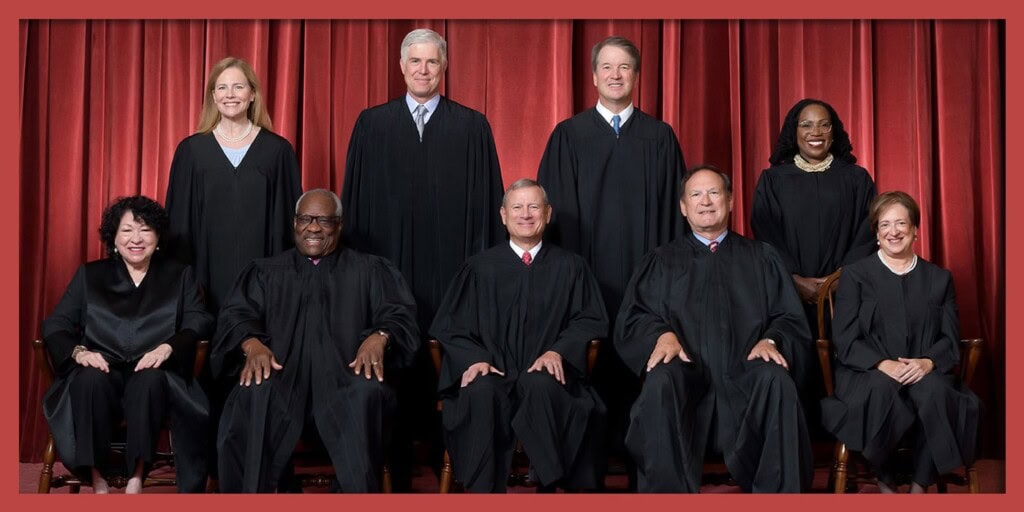
PETITION TO THE SUPREME COURT OF THE UNITED STATES AND TO THE U.S. CONGRESS
(By signing this form, you will be added to the Supreme Court petition and an email will be sent to your U.S. Representatives and Senators.)
Subject: Justice Clarence Thomas must recuse himself from Monsanto Co. v. Durnell, No. 24-1068, due to conflicts of interest undermining judicial impartiality.
To the Honorable Justices of the Supreme Court of the United States and the U.S. Congress:
We, the undersigned citizens, believe that Justice Clarence Thomas should recuse himself from participating in Monsanto Co. v. Durnell — a case docketed for the current term involving alleged harms from Monsanto’s Roundup herbicide — because of his previous employment with the company, his documented history of support for the company as a Senate aide, and longstanding ethical concerns related to his position on previous cases involving Monsanto — all of which give rise to reasonable questions about his impartiality.
Background
Monsanto Co. v. Durnell is a petition for writ of certiorari in which Monsanto seeks review of a state court judgment against it on claims that exposure to glyphosate — the active ingredient in Roundup — caused serious illness, and that Monsanto failed to warn consumers about the risks.
Grounds for Recusal
Under 28 U.S.C. § 455, federal judges and justices should disqualify themselves “in any proceeding in which their impartiality might reasonably be questioned,” including when they have a former professional relationship with a party.
1. Former Employment at Monsanto
- Early in his career, Clarence Thomas worked as an attorney for Monsanto Corporation in the late 1970s. Subsequently, as a Senate aide, it is documented that he relentlessly lobbied his boss on behalf of corporate interests, including Monsanto’s.
- Although more than four decades have passed, this prior professional relationship creates at least the appearance of bias when Thomas adjudicates cases involving his former employer — particularly given the seriousness and potential economic impact of disputes like Durnell.
- In past Supreme Court cases involving Monsanto, including Monsanto Co. v. Geertson Seed Farms (2010), Thomas did not recuse despite this connection, while other justices, like Justice Breyer, voluntarily stepped aside when they had distinct personal ties to the case.
2. Judicial Ethics and Public Confidence
- Supreme Court justices are not bound by the Judicial Code of Conduct that applies to lower federal judges, and are rarely required to explain recusal decisions. Still, experts and lawmakers have repeatedly noted that the Court’s legitimacy depends on avoiding even the appearance of partiality.
- Public trust in the judiciary is eroding, in part due to perceptions that justices participate in cases where conflicts should warrant recusal. Ensuring that Justice Thomas steps aside from Monsanto Co. v. Durnell would affirm the principle that justice must not only be done but be seen to be done.
3. Precedent and Standards
- In federal practice, judges routinely recuse themselves when a reasonable observer could question their impartiality, including when they previously represented a party in a matter substantially related to the case before the judge.
- Although recusal by a Supreme Court justice is discretionary, it is grounded in the same normative principles that apply across the judiciary: fairness, impartiality, and confidence in the rule of law.
Conclusion
For these reasons, we respectfully demand that Justice Clarence Thomas recuse himself from participating in the Supreme Court’s consideration of Monsanto Co. v. Durnell.
Continuing to hear a case in which a justice has a longstanding connection to one of the parties — and declining to explain why no conflict exists — diminishes public confidence in the Court and undermines the integrity of our judicial system.
Respectfully,
[Your Name]
[Address, City, State]