


Carcinogenic atrazine does not belong in our food, water, or on our lawns!
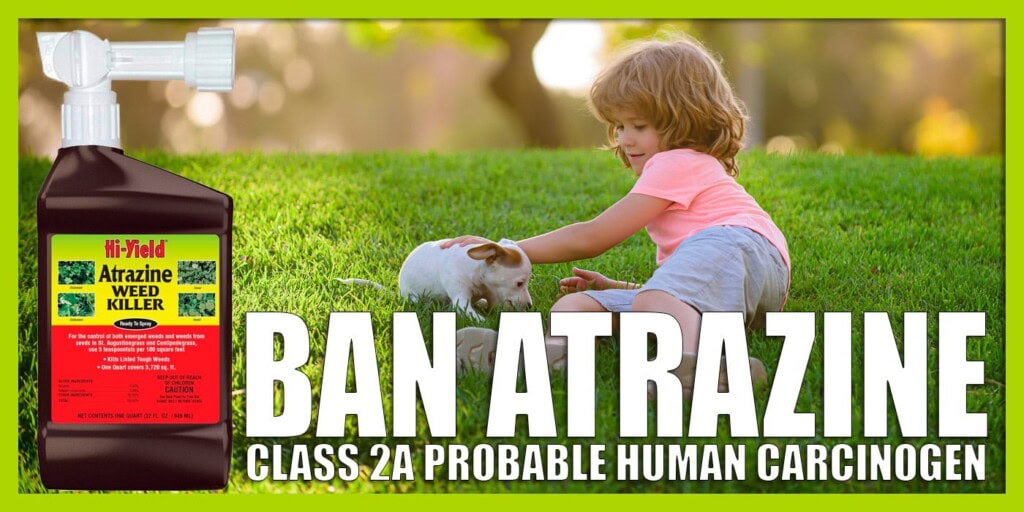
THE INTERNATIONAL AGENCY FOR RESEARCH ON CANCER (IARC) DESIGNATES ATRAZINE HERBICIDE AS A PROBABLE HUMAN CARCINOGEN
In November 2025 the IARC designated atrazine, the second most widely used herbicide in the U.S., as a Group 2A Probable Human Carcinogen. The agency’s evaluation has been published in the journal, The Lancet Oncology.
The IARC’s designation of glyphosate herbicide as a probable human carcinogen in 2015 led to the filing of tens of thousands of lawsuits against Bayer-Monsanto. The total number of lawsuits currently stands at over 160,000 and has led to billions in court-awarded settlements to victims as well as the tanking of Bayer’s stock value.
The impact of the IARC designation on China-owned Syngenta and atrazine remains to be seen. But there’s a lot more to the story of atrazine than the IARC’s recent designation as a probable human carcinogen…
Some not-so-fun facts about atrazine and Syngenta…
Professor Tyrone Hayes, scientist at UC Berkeley, was hired by Syngenta many years ago to conduct toxicity studies to prove that atrazine is safe. What Hayes found was the complete opposite: He found the toxic herbicide had endocrine-disrupting effects so powerful that it can change male frogs into females, posing serious risks to environmental and human health.
Instead of warning regulators and the public about the scientific findings, Syngenta launched a decade-long attack campaign against Hayes, even going so far as to threaten Hayes’ family.
Based on Hayes’ studies, the European Union banned the herbicide in 2004. As of today, over 60 countries have banned atrazine.
But here in the United States, approximately 70 to 80 million pounds of the herbicide are used annually. Atrazine is used on sweet corn, field corn (used for ethanol, animal feed, and ultra processed junk foods for humans), soybeans, canola, wheat, sugarcane, sorghum, macadamia nuts, pineapples, guava, eucalyptus plantations, golf courses and more. It is also used by conventional landscaping and lawncare maintenance companies.
Atrazine usage is second only to glyphosate, contaminating our farmland, food, wetlands, rivers, and groundwater across the country.
The herbicide is a well-documented hormone disruptor that interferes with reproduction, growth, immune function, and normal development in fish, amphibians, and mammals.
EPA’s own past assessments have found that atrazine is likely to harm more than 1,013 of the nation’s most endangered animals and plants. That’s 56% of all endangered plants and animals in the U.S., including the Whooping Crane, Sierra Nevada Yellow-Legged Frog, and San Joaquin Kit Fox.
In 2017, the Environmental Working Group reported that drinking water systems supplying 30 million Americans in 28 states were contaminated with atrazine. A dozen communities saw surges three to seven times above EPA’s own safety threshold.
As an endocrine disrupter, atrazine doesn’t just feminize male tadpoles. It can interfere with the hormonal activity of humans at extremely low doses and is linked to birth defects and cancer, confirmed by the IARC in November 2025.
We cannot allow chemical farmers and businesses to continue using this dangerous poison at the expense of human health and wildlife. And certainly not for the benefit of a foreign chemical company.
The Trump administration campaigned on and promised to put America First and to Make America Healthy Again. The Trump EPA’s quest to weaken protections against atrazine is not only a China First policy decision, it makes America Sicker.
Tell the White House and Congress that this is not acceptable. They must direct the EPA to join the rest of the world in banning atrazine. We elect our legislators to represent us and not corporations. They must be told they will suffer the consequences in forthcoming election cycles if they continue working against our health and best interests.